

CAN a man be so handsome that millions of women, young and old, around the world have become obsessed with him?
That seems to be the case with Chinese actor Zhang Linghe, who has shot to international stardom with the costume drama, Pursuit of Jade. Just mention his name and the eyes of all my female friends will widen with giddy delight and enthusiastic nods and squeals of “He’s soooo handsome!” What follows will be breathless dissecting of his best scenes in the 40-episode drama that aired in March.
There are, of course, many extremely good-looking and popular actors from other East Asian countries like Japan - Yokohama Ryusei, Sakaguchi Kentaro, Yamashita Tomohisa - and from South Korea - Cha Eun Woo, Hyun Bin, Park Bo Gum - and lots more. But none has struck the popularity stakes globally like Zhang.I, too, am quite smitten by him, but as a long-time consumer of Asian entertainment, I have also seen other actors becoming extremely popular after a hit drama only to fade as new dramas take over.
It's quite unusual that four months on, Zhang is still holding pole position, and it's thanks to the drama and him spreading westward.
That is what I find most interesting: how Western audiences, or rather non-Asian Western women, have become enamoured of Zhang, too. This is especially so when in the not-so-distant past, Asian male good looks, especially of K-pop idols, were ridiculed as effeminate with slanted eyes, too much plastic surgery and make-up.
Well, what do you know? Thanks to streaming sites like Netflix, audiences everywhere have become exposed to Asian entertainment like never before, and bam! the scales have fallen off their eyes.
By Asian, I am referring to East Asians, not people from the Indian subcontinent, because the latter’s good looks differ greatly with their larger, widely set eyes, thick eyebrows, prominent noses, and they are more hirsute; hence, they look a bit more like Caucasians.
Through the dramas and movies, Western audiences are not just exposed to handsome Asian men but also to how the stories are told, especially romance that focuses on character development that slowly builds up the relationship between the couple before their first kiss.
This is unlike Western romances that often have the couple getting physically intimate almost immediately.
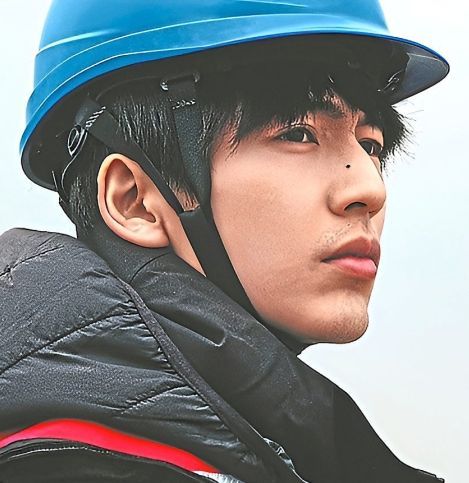
Singapore aesthetic doctor Siew Tuck Wah explains why Zhang’s face has wowed so many. First are his large and well-proportioned, youthful and alert eyes. Next, his well-defined and structured jawline that signals masculinity. Thirdly, clear and blemish-free skin that signals health.
Dr Siew adds that Zhang’s is not overly rugged or soft, meaning his face has structure and refinement, a balance that makes him universally appealing. He suspects Zhang might have had treatments done to his skin but notes if so, it was done very naturally.
One more standout facial feature not raised by Dr Siew is Zhang's lips that are naturally rosy red. Dr Siew says Zhang looks best in period dramas because the hair is styled to show all his best features.
Well, I think Zhang is also very dishy in the modern drama, The Best Thing, in which he played a traditional medicine doctor, but it’s true he was sensational in Pursuit of Jade. My mak datin friend who rarely watches Chinese dramas only wants to watch him in his next historical drama, The Road to Glory, hoping to relive those good looks with old-fashioned hair and clothes that he carries off so well.
Zhang, who is 29, is admired not just for his beauty but his brains, too. He graduated from Nanjing Normal University with a degree in electrical engineering. He fronted a well-received documentary series, The Answer Is Earth, that is said to be a personal project because of his engineering background as it explores China's low-carbon transition and renewable energy sector.
While many Korean actors have long been popular, Chinese dudes are pretty much on par now with the likes of Zhang, Xiao Zhan, Wu Lei, Yang Yang, Chen Xingxu, Li Yunrui... I really could go on.
There are also many East Asian actresses who have become well known, and that’s evident from how both male and female actors and celebrities have become ambassadors for many brands.
And that is another cultural phenomenon that is worth noting. Until the turn of the century, we in Asia would usually see famous white people paid to promote all sorts of goods to us.
I am reminded of the 2003 movie, Lost in Translation, that starred Bill Murray as a washed-out American movie star who travels to Tokyo to promote Suntory whiskey. Even then, when most Asians were still in awe of the West’s hard and soft power, especially the United States, it struck me as ironic that the film was premised on a fading white actor being regarded as an effective salesman for an Asian product.
Then there was Brad Pitt's Heineken’s 2005 commercial showing him trying to buy beer while being chased by the paparazzi. It was a huge hit.
Twenty years on, Kim Taehyung, better known as V, a member of the South Korean superstar group BTS, is the global ambassador of the most iconic US drink, Coca-Cola, for its Zero campaign.
Back in 2021, Vogue Business, in an article, "Forget Hollywood. There’s a new global brand ambassador", stated that “As brands create content across more diverse ad channels, they’re moving away from traditional Hollywood stars in favour of multifaceted, digitally savvy entertainers such as BTS.”
In 1980, it was actress Brooke Shields who starred in the Calvin Klein Jeans campaign delivering the controversial tagline: "You want to know what comes between me and my Calvins? Nothing.”
In 2026, another BTS member, Jungkook, is the global ambassador. His limited-edition, Jung Kook for Calvin Klein (CKJK) capsule line, which features underwear and apparel, sold out in minutes across multiple global markets.
Indeed, Jungkook is widely acknowledged as an “elite brand multiplier” because his endorsement of any brand dramatically increases visibility, prestige and most importantly, sky-rocketing sales.
That’s why the highly prestigious watch brand, Hublot, chased him for 18 months before he agreed to sign on as its global ambassador.
Many other Asian stars, including from Thailand, have been appointed ambassadors of high fashion and retail labels.
Thai actor Metawin Opas‑iamkajorn represents Prada; Chinese actor Song Weilong (whose good looks and rosy lips are said to be on par with Zhang) is a Gucci and Omega ambassador; Korean actor Cha Eun-woo signed for Saint Laurent and jewellery brand Chaumet. The list goes on, including many top female actresses and artistes like Blackpink members, Yang Mi, Dilraba Dilmurat, Song Hye-kyo and IU.
No surprises that Zhang is ambassador for a slew of diverse brands too, including Bulgari, Puma, Lenovo, Motorola and, with his perfect face, Gucci Beauty and Lancome.
This is truly the Asian century in so many ways. The flow of influence is being reversed or is at last becoming a two-way traffic. We are no longer in thrall of the West that held sway post-colonialism.
I do not deny there was and still is much good coming from the West. But as Prof Amitav Acharya from American University, Washington, DC, writes on Chathamhouse.org, “Globalisation is not disappearing, but taking a new, eastern turn.”
What we are seeing is a definitive shift from Western dominance to a multipolar world. Experts have nicely described it as not merely a "decline of the West" but rather the rise of Asia's own confidence in its soft power as well as its economic and scientific capabilities.
And who's the poster boy for it? Zhang Linghe!
By

